

Future Skills 2030. Wie belastbar ist das neue Framework?
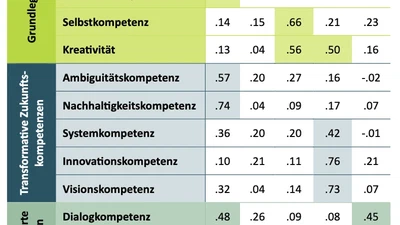
Der Stifterverband hat sich u.a. auf Basis meiner kritischen Analyse von Future-Skills-Modellen und Frameworks (Kalz, 2023) daran gemacht, ein sog. “Future Skills Framework 2030” …

I am a researcher in educational technology whose work explores how digital technologies reshape learning, teaching, and educational institutions. My research combines educational technology, learning sciences, feedback research, and critical perspectives on digital transformation.Current areas of interest include peer feedback and feedback literacy, open and networked learning, AI and misinformation in education, digital learning ecologies, and the societal implications of data-driven and platform-based education. Methodologically, my work spans empirical learning research, psychometric scale development, design-oriented research, and conceptual analyses of digital transformation in education.
I am working as a full professor of educational technology and Chief Information/Chief Digital Officer (CIO/CDO) at the Heidelberg University of Education. I serve as associate editor of the International Journal of Artificial Intelligence in Education and editorial board member of the Journal of Computing in Higher Education. I am a senior-fellow of the Interuniversity Center for Educational Sciences (ICO) and the Dutch research school on information and knowledge systems (SIKS). I work as director of the study program E-Learning and Media Education and director of the Heidelberg Centre for Digital Transformation in Education. Over the years I could secure approx. 4 Mio EUR of research funding for my institutions from competitive projects with a total budget of 36 Mio EUR. I have been an invited keynote speaker on more than 60 conferences and events. Besides European projects I am regularly involved in educational innovation and consulting projects with partners inside and outside of my institutions including clients like the International Labour Organisation, United Nations Environment Program, the European Commission, UNESCO, OECD or other international and national organizations.
PhD in Educational Technology
Open University of the Netherlands
MA Multimedia Didactics
University of Erlangen-Nuremberg
First State Examination for Teachers
University of Cologne
Der Stifterverband hat sich u.a. auf Basis meiner kritischen Analyse von Future-Skills-Modellen und Frameworks (Kalz, 2023) daran gemacht, ein sog. “Future Skills Framework 2030” …
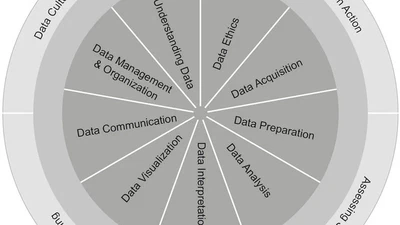
In her PhD project, Marlene Ganz deals with foundational work on data-literacy. Our joint research interest is how data-literacy can be theoretically conceptualized and measured …
Angesicht einer Interviewanfrage und der andauernden Diskussion zum Smartphone-Verbot an Schulen habe ich mich gefragt, auf welcher wissenschaftlichen Basis diese Diskussion …
The concept of data literacy suffers from a persistent theoretical and definitional fragmentation. To contribute to more coherence in the field, we introduce two systematic …
Peer feedback has the potential to contribute to a transformation of the feedback culture in higher education. The disposition of students for peer feedback is a crucial factor for …
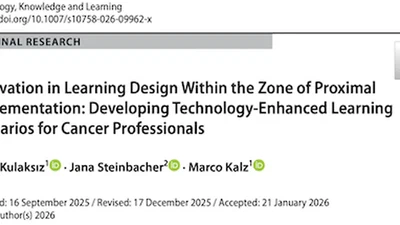
Technology-enhanced learning (TEL) is a domain-dependent field of expertise, and it is a challenge to transfer the intellectual richness of TEL research to new fields of …
January 2025 Present
October 2024 Present

August 2024 Present
December 2023 Present
October 2021 Present
No upcoming talks currently scheduled.
22 September 2025
AiPioneers Conference 2025
Universität Bremen, Germany
Details24 January 2024
Kick-off Veranstaltung zur Vorbereitung des 10. Tags der Lehre 2025. SKILLS FOR TOMORROW.
online
Details19 September 2023
Themenreihe "KI in der Hochschullehre" der Deutschen Gesellschaft für Hochschuldidaktik
online
Details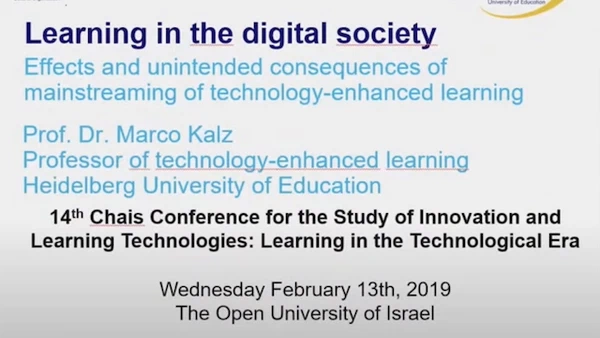
13 February 2019
Annual CHAIS conference of the Research Center for Innovation in Learning Technologies at the Open University of Israel
Ra'anana, Israel
DetailsI publish the newsletter The day’s refrain – musings on digital education every three to four weeks.